

पुरुष बांझपन (Male Infertility)
Table of Contents
Male Infertility
What is it?
Male infertility is a condition in which pregnancy is difficult to achieve due to male-related factors. Generally, if a couple is unable to conceive after one year of regular unprotected intercourse, medical evaluation is recommended. Approximately 40–50% of infertility cases involve male-related factors.
Possible Causes
1. Sperm Production Problems
- Low sperm count
- Reduced sperm motility
- Abnormal sperm structure (morphology)
2. Varicocele
- Enlargement of the veins in the testicles
- One of the most common causes of male infertility
3. Hormonal Problems
- Imbalance of testosterone or other hormones
4. Infections
- Genital infections
- Prostate or epididymis infections
5. Lifestyle Factors
- Smoking
- Alcohol consumption
- Obesity
- Excessive heat exposure
- Certain medications
Main Symptoms
In many cases, there may be no obvious symptoms. However, some men may experience:
- Pain or swelling in the testicles
- Sexual problems
- Symptoms related to hormonal imbalance
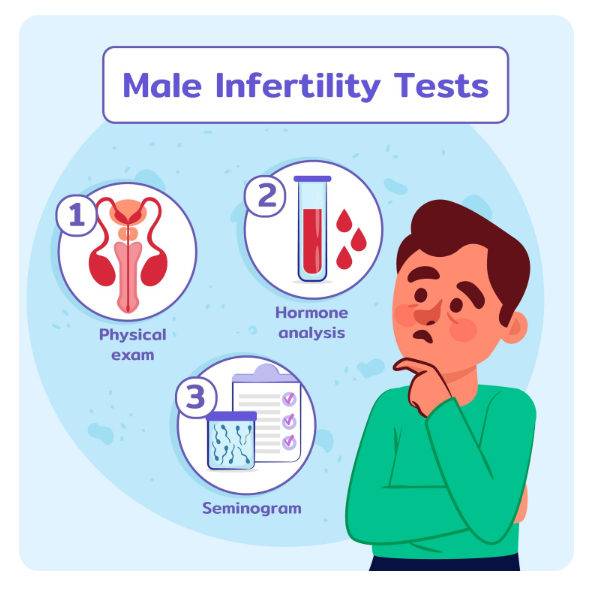
Diagnosis
Evaluation of male infertility may include several tests.
1. Semen Analysis
The most important test. It evaluates:
- Sperm count
- Sperm motility
- Sperm morphology
2. Hormone Tests
- Testosterone
- FSH
- LH
- Prolactin
3. Imaging
- Ultrasound scrotum
- Doppler study (for varicocele)
4. Genetic Tests
In some severe cases:
- Karyotype analysis
- Y chromosome microdeletion test
Treatment
Treatment depends on the underlying cause.
1. Lifestyle Improvement
- Stop smoking
- Maintain a healthy weight
- Exercise regularly
- Follow a balanced diet
2. Medical Treatment
- Hormonal treatment
- Treatment for infections
- Antioxidant therapy
3. Surgical Treatment – Varicocele Surgery
- Enlarged veins in the testicles are corrected
- This may improve sperm quality
4. Assisted Reproductive Techniques
If natural conception is not possible:
- IUI (Intrauterine Insemination)
- IVF (In Vitro Fertilization)
- ICSI (Intracytoplasmic Sperm Injection)
When to See a Doctor?
- Unable to conceive after one year
- Swelling or pain in the testicles
- Sexual problems
- History of testicular surgery during childhood
Prevention and Lifestyle Tips
- Maintain a healthy lifestyle
- Limit smoking and alcohol
- Avoid excessive heat exposure
- Treat infections promptly
What to Do Next?
- Book an appointment
- Consult a doctor for proper evaluation and treatment
For More Information
- European Association of Urology – Male Infertility Guidelines
- American Urological Association – Male Infertility Guidelines
- Urological Society of India – Male Infertility Recommendations