


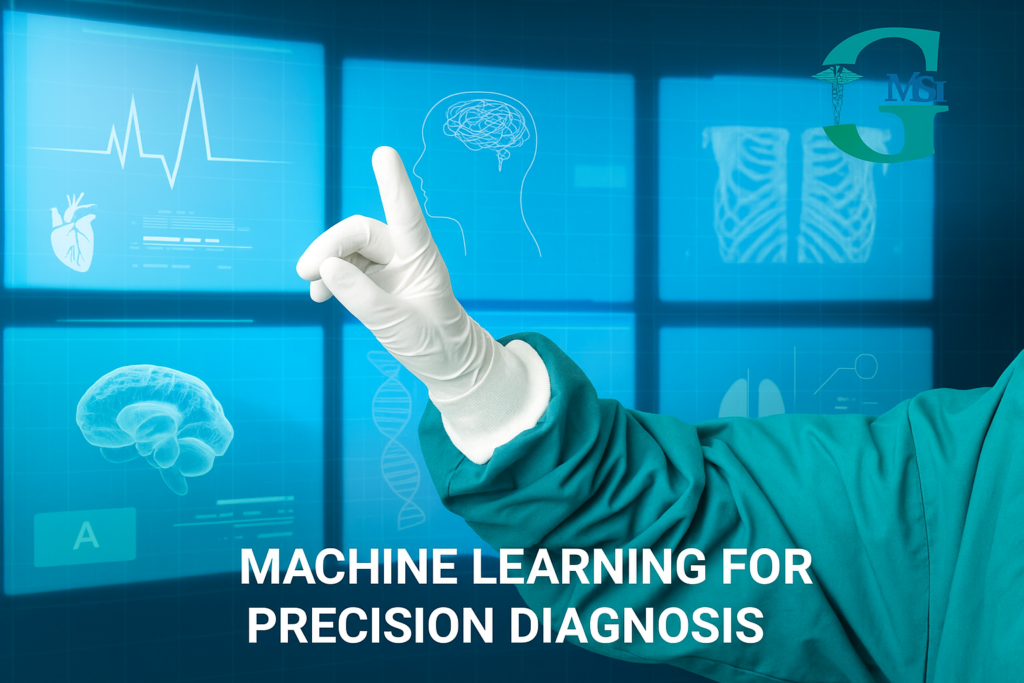
Healthcare is entering a new era where technology is no longer just supportive — it is central to diagnosis, treatment, and long-term patient care. One of the most transformative innovations in this revolution is Machine Learning for Precision Diagnosis, a concept reshaping how doctors understand diseases, analyze symptoms, and plan treatment strategies.
Today, machine learning (ML) is making diagnosis faster, more accurate, and more personalized. From cancer detection to kidney disorders and urinary tract diseases, ML algorithms are assisting specialists across medical branches — especially in fields where early detection is crucial, such as urology. A modern Urology doctor now benefits immensely from these digital tools, reducing guesswork and improving outcomes for patients.
Why Hospitals Need Machine Learning Today ?
Healthcare systems worldwide face challenges such as increasing patient load, complex diseases, and the need for accuracy. Implementing Machine Learning for Precision Diagnosis ensures that hospitals maintain high standards of care.
Gurdevi Memorial Superspeciality Hospital integrates digital tools and AI-driven insights into diagnostic workflows, empowering specialists with reliable, real-time support. With intelligent software systems and advanced imaging analysis, patients receive refined assessments that match global standards.
This blend of medical expertise and technology creates an environment where patient safety, efficiency, and accuracy are always top priorities.
How Machine Learning Enhances Precision ?
1. High-Accuracy Medical Imaging
Radiology is one of the biggest beneficiaries of ML. Algorithms review MRI, CT, and ultrasound scans in seconds, detecting even the faintest abnormalities.
With Machine Learning for Precision Diagnosis, radiologists and a Urology doctor can catch:
- Small kidney stones
- Microscopic tumors
- Bladder wall irregularities
- Prostate anomalies
Earlier detection leads to earlier treatment, higher recovery rates, and improved long-term health.
2. Predictive Analytics for Disease Progression
Predictive models use patient history, lifestyle, lab values, and imaging to forecast disease progression.
For instance, ML can predict:
- Whether a patient’s kidney stone will grow or pass naturally
- If a prostate condition may advance to cancer
- Individual risks of recurring urinary infections
3. Intelligent Decision Support Systems
Doctors make countless decisions every day, and any delay can affect patient health. ML-powered decision support tools analyze real-time clinical inputs and provide suggestions based on global medical data.
This helps improve:
- Diagnostic confidence
- Treatment strategy selection
- Medication accuracy
- Post-surgery monitoring
Such systems are becoming a core part of modern hospitals, including advanced healthcare centers like Gurdevi Memorial Superspeciality Hospital, where clinicians rely on both experience and technology for better outcomes.
Why Machine Learning Matters for Urology ?
Urology is one of the medical fields where early diagnosis is critical. Many urinary and kidney problems stay hidden until they cause major complications.
Here’s how ML supports urologists:
🔹 Prostate Cancer Detection
AI-powered MRI interpretation recognizes suspicious lesions faster and more accurately.
🔹 Kidney Stone Identification
Algorithms analyze CT scans and predict stone composition, helping doctors choose the best treatment.
🔹 Bladder Disease Mapping
ML can detect wall abnormalities and forecast progression.
🔹 UTI Pattern Detection
Recurrent urinary tract infections often follow predictable patterns, which ML can identify quickly.
🔹 Robotic Assistance
Modern surgical robots use ML-based precision mapping for safe and accurate procedures.
A Urology doctor using ML becomes more efficient, precise, and patient-centered — leading to fewer complications and better recovery.
How Hospitals Are Adopting Machine Learning ?
Leading health centers around the world are upgrading their diagnostic systems with AI and ML. In India, hospitals such as Gurdevi Memorial Superspeciality Hospital are integrating digital technologies into their clinical workflows.
These systems help:
- Reduce waiting times
- Improve diagnostic accuracy
- Streamline test interpretation
- Enhance doctor-patient communication
As technology grows, hospitals adopting Machine Learning for Precision Diagnosis will provide superior healthcare services compared to traditional setups.
Real-World Impact of Machine Learning in Diagnosis
✔ Earlier disease detection
✔ Reduced misdiagnosis
✔ Faster treatment decisions
✔ Better monitoring
✔ Lower treatment costs
✔ Improved patient experience
Even minor medical issues can turn serious without timely intervention. With ML tools, diseases are caught earlier, specialists act faster, and patients recover better.
This is particularly essential in fields where detailed imaging and pattern recognition matter, such as urology. A Urology doctor using ML tools is better equipped to diagnose hidden or complex conditions.
FAQs about Machine Learning for Precision Diagnosis :
1. How does machine learning make diagnosis more accurate?
ML analyzes thousands of medical data points, compares them with global health datasets, and identifies patterns that humans may miss. This enhances accuracy and reduces diagnostic errors.
2. Is machine learning useful for urological conditions?
Yes. A Urology doctor benefits greatly from ML systems in detecting kidney stones, prostate conditions, urinary infections, and bladder diseases.
3. Does machine learning replace doctors?
No. ML supports doctors — it does not replace them. Clinical judgment, experience, and human understanding are irreplaceable.
4. Are hospitals in India using this technology?
Yes, many advanced hospitals, including us , are adopting AI-based diagnostic tools to improve patient care.
5. Can machine learning personalize treatment plans?
Absolutely. ML recommends treatment options based on individual patient data, making therapies more targeted and effective.
Conclusion :
Machine learning has transformed the modern medical world, making diagnosis faster, sharper, and more accurate. By integrating Machine Learning for Precision Diagnosis, healthcare providers are detecting diseases earlier and guiding patients toward more reliable treatment outcomes.
For specialists like a Urology doctor, ML has become an essential companion — empowering them with advanced tools that elevate precision and reduce uncertainties. This digital support is especially valuable for the best urosurgeon in Yamunanagar, who can now make informed decisions backed by real-time data and predictive analytics. Whether it is prostate care, bladder evaluation, or kidney stone treatment in Yamunanagar, machine learning ensures that every diagnosis is more refined and every treatment plan is patient-focused.