

Cancer care in India has undergone a remarkable transformation over the last decade. Among the most groundbreaking advancements is the rise of Robotic Cancer Surgery, a technology that has redefined precision, safety, and overall treatment outcomes for thousands of patients. With increasing availability across major hospitals, this innovative surgical technique is becoming a powerful tool in the fight against cancer.
India’s healthcare sector is rapidly adopting robotics to improve accuracy, reduce surgical risks, and enhance patient recovery. Modern robotic systems allow surgeons to perform highly complex procedures with more control and clarity than ever before.
Understanding Robotic Cancer Surgery :
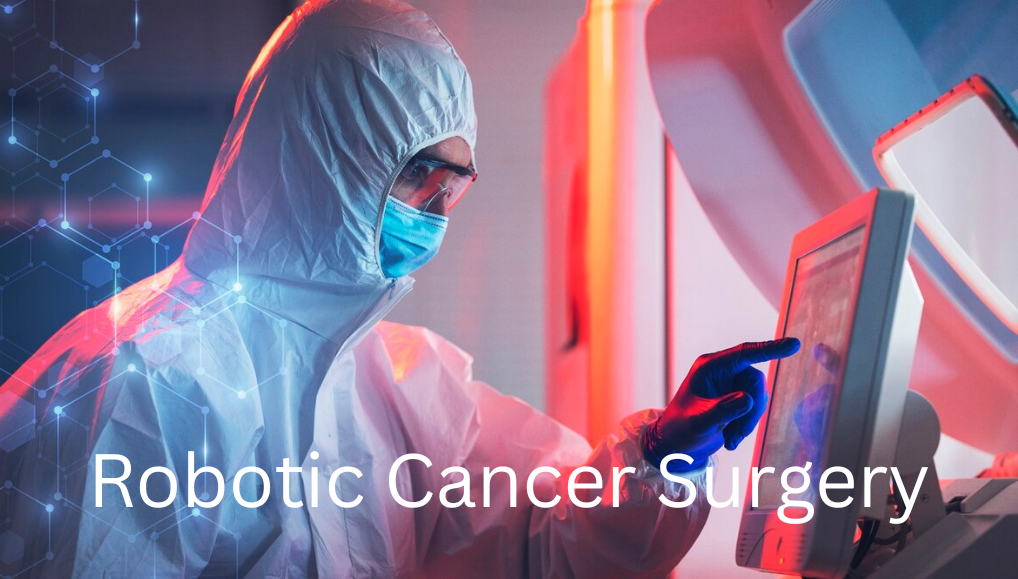
This is a minimally invasive technique where surgeons use robotic systems to perform cancer-related operations. Contrary to what many assume, the robot does NOT perform the surgery on its own. Instead, it is fully controlled by a trained surgeon who operates using a console.
These robotic arms offer exceptional precision, flexibility, and a 3D magnified view — making it easier to remove cancerous tissues while protecting healthy organs. This level of control is especially crucial when tumors are located in complex or hard-to-reach areas.
Why India Is Rapidly Adopting Robotic Cancer Surgery ?
India is emerging as a major hub for technologically advanced medical treatments. Several factors are here :
1. Increasing cancer burden
India witnesses millions of new cancer cases each year. As early detection improves, so does the demand for advanced treatment options that offer better outcomes with fewer complications.
2. Greater availability of trained surgeons
In recent years, medical training programs and international collaborations have significantly increased the number of surgeons skilled in robotic procedures.
3. Technological growth in healthcare infrastructure
Government and private hospitals are investing heavily in robotic surgical systems, making them available not only in metro cities but also in regions like Haryana, Punjab, and Uttar Pradesh.
4. Patient preference for minimally invasive surgeries
Patients increasingly prefer solutions that offer less pain, shorter hospital stays, and a faster return to daily life — making robotic surgery a preferred choice.
How Robotic Cancer Surgery Improves Precision and Outcomes ?
The greatest advantage of this Surgery lies in its unmatched accuracy. The robotic system filters out natural hand tremors, enabling highly precise movements that are difficult to achieve through traditional methods.
Key improvements include:
• Better visualization
Robotic systems provide a 3D high-definition view of the surgical area. Surgeons can see even the smallest blood vessels and nerves, which helps preserve healthy tissue.
• Enhanced dexterity
The robotic arms can rotate more smoothly and bend further than a human wrist, allowing for intricate movements inside the body.
• Minimized tissue damage
Smaller incisions mean less trauma to muscles and organs, reducing the risk of infection and complications.
• Faster recovery
Most patients experience reduced pain, less blood loss, and a quicker return to normal activities compared to open surgery.
These advantages are the reason many patients now prefer advanced techniques like Cancer surgery in Yamunanagar, as hospitals in smaller cities are increasingly adopting robotics.
Types of Cancer Treated Using Robotic Surgery in India :
Robotics is proving effective across a wide range of cancers, including:
- Prostate Cancer — one of the most common areas where robotic surgery is used.
- Gynecological Cancers — including ovarian, cervical, and uterine cancers.
- Head & Neck Cancers — minimally invasive procedures reduce complications.
- Kidney and Bladder Cancer — robotics helps preserve healthy kidney tissue.
- Lung Cancer — robotic-assisted thoracic surgery improves precision.
- Colorectal Cancer — better visualization ensures accurate tumor removal.
- Oral Cancer — widely used in India due to high incidence of mouth cancer.
How Robotic Surgery Is Improving Cancer Care in Smaller Cities ?
Traditionally, patients had to travel long distances to metro cities for modern treatments. But today, hospitals such as Gurdevi Memorial Superspeciality Hospital are bringing advanced oncology services to regions that previously lacked access to world-class technology.
Cities like Yamunanagar, Panipat, Ambala, and Karnal are witnessing rapid development in healthcare infrastructure. This is improving survival rates and ensuring that patients no longer need to delay treatments due to travel challenges.
Patients now have access to options like Cancer surgery in Yamunanagar, which helps reduce emotional, financial, and logistical stress while ensuring high-quality medical care.
Benefits for Patients :
Here are the major patient advantages:
1. Reduced pain and discomfort
Smaller incisions mean less tissue damage and lower post-surgical pain.
2. Lower risk of complications
Minimal exposure reduces risks of infections, bleeding, and internal damage.
3. Faster postoperative recovery
Patients typically leave the hospital sooner and resume normal activities quickly.
4. Lower visible scarring
Tiny incisions lead to better cosmetic outcomes.
5. Higher surgical success rates
The precision of robotics enables cleaner tumor removal and reduces recurrence risk.
6. Greater surgeon control
Robotics enhances the surgeon’s ability to operate in delicate areas with minimal error.
Safety and Accuracy: Addressing Common Misconceptions
Many patients believe that robotic systems perform the surgery independently, which is not true. Surgeons maintain full control at every step. Robotic systems simply enhance their abilities, making procedures safer and more precise.
Another common worry is that robotic surgeries are too new to be trusted. However, robotic systems have been used for more than two decades globally and are backed by thousands of successful clinical studies.
India’s Future with Robotic Cancer Surgery
India is on a fast track to becoming a leader in robotic surgical care. As more hospitals adopt this technology, the cost of robotic procedures will continue to decrease, making it accessible to even more patients.
The integration of AI, 3D imaging, and improved robotic systems will allow earlier detection, more precise tumor removal, and better survival outcomes. For a country with such a large population and rising cancer cases, this transformation holds immense promise.
FAQs :
1. Is Robotic Cancer Surgery safe?
Yes. It is one of the safest surgical methods available today, offering enhanced precision and fewer complications.
2. Does the robot operate on its own?
No. A qualified surgeon controls the robotic system entirely.
3. Is robotic surgery painful?
It is less painful than traditional open surgery due to smaller incisions.
4. What cancers can be treated with robotic surgery?
Prostate, lung, gynecological, kidney, colorectal, and head & neck cancers are some common examples.
5. Is robotic surgery available in smaller cities?
Yes, many advanced hospitals across Tier-2 and Tier-3 cities now offer robotic procedures.
Conclusion :
This Surgery is revolutionizing the future of oncology in India by providing greater precision, reduced complications, and significantly improved patient recovery. With hospitals like Gurdevi Memorial Superspeciality Hospital adopting these advanced technologies, patients no longer need to rely solely on metro cities for world-class treatment.
This progress is especially beneficial for those seeking Cancer surgery in Yamunanagar, where access to modern and minimally invasive cancer care continues to expand.