

Kidney Stone Treatment
Table of Contents
What is a Kidney Stone?
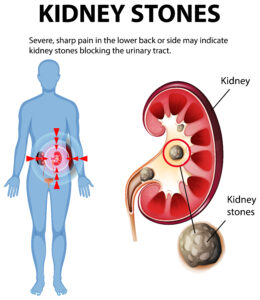
Kidney stones are hard deposits made of minerals and salts that form inside the kidneys. They can vary in size from very small particles to larger stones that may block the urinary tract and cause severe pain. Kidney stones can affect people of all ages and often require medical evaluation for proper treatment.
Symptoms of Kidney Stones
Common symptoms of kidney stones include:
Severe pain in the back or side (flank pain)
Pain that spreads to the lower abdomen or groin
Burning sensation during urination
Blood in the urine (pink, red, or brown color)
Frequent urge to urinate
Nausea and vomiting
Cloudy or foul-smelling urine
Fever and chills (in case of infection)
Sometimes small stones may pass without causing noticeable symptoms.
Causes of Kidney Stones
Kidney stones can develop due to several factors, including:
Drinking insufficient water (dehydration)
High intake of salt or animal protein
Excess calcium or uric acid in urine
Family history of kidney stones
Obesity or sedentary lifestyle
Recurrent urinary tract infections
Certain medical conditions or medications
Treatment Options for Kidney Stones
The treatment depends on the size, location, and type of the stone as well as the patient’s symptoms.
1. Conservative Treatment (Small Stones)
Small stones may pass naturally with supportive care:
Drinking plenty of water
Pain-relieving medications
Medicines that help relax the ureter and allow the stone to pass (Medical Expulsive Therapy)
2. Non-Surgical Treatments
If the stone does not pass naturally, minimally invasive treatments may be recommended.
- ESWL (Extracorporeal Shock Wave Lithotripsy): Shock waves are used from outside the body to break the stone into smaller fragments so that they can pass through urine.
- URS (Ureteroscopy): A thin scope is passed through the urinary tract to locate and break or remove the stone.
3. Advanced Surgical Treatments
For larger or complex stones, advanced procedures are used:
- RIRS (Retrograde Intrarenal Surgery): A flexible scope is inserted through the urethra and bladder into the kidney to break the stone using a laser.
- PCNL (Percutaneous Nephrolithotomy): A small incision is made in the back to directly remove large kidney stones using specialized instruments.
RIRS vs PCNL
| Feature | RIRS | PCNL |
|---|---|---|
| Procedure Type | Minimally invasive | Slightly more invasive |
| Stone Size | Small to medium stones | Large stones (>2 cm) |
| Incision | No external incision | Small incision in the back |
| Hospital Stay | Usually 1 day | 2–3 days |
| Recovery | Faster | Slightly longer recovery |
Both procedures are safe and effective, and the choice depends on the stone size, location, and patient condition.
Recovery Time
Recovery depends on the type of treatment performed.
Conservative treatment: a few days to weeks for stone passage
ESWL / URS: patients usually resume normal activities within a few days
RIRS: recovery usually takes about 3–5 days
PCNL: recovery may take 1–2 weeks
Doctors may advise drinking more fluids and following dietary precautions to prevent recurrence.
FAQs:
Yes, small stones (usually less than 5 mm) may pass naturally with adequate hydration and medications.
Modern procedures such as RIRS and PCNL are performed under anesthesia, so patients do not feel pain during the procedure.
Most procedures take about 30 minutes to 2 hours, depending on the stone size and complexity.
Yes, kidney stones can recur. Drinking enough water and following dietary advice can help reduce the risk.
You should consult a doctor if you experience severe pain, blood in urine, fever, or difficulty passing urine.