


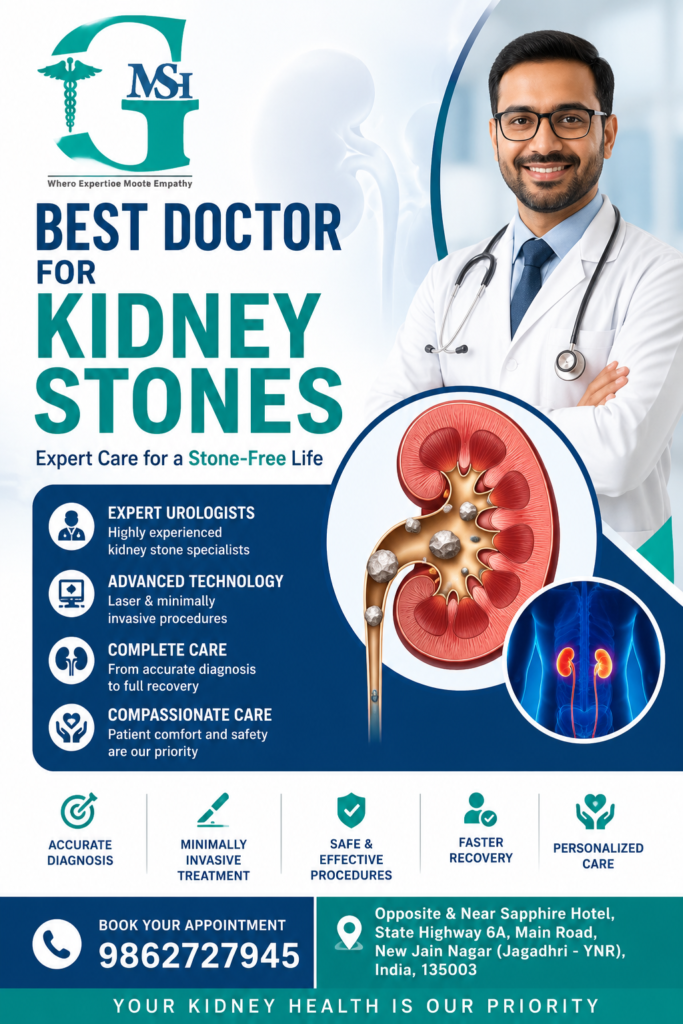
Best doctor for kidney stones plays a vital role in providing the right diagnosis, effective treatment, and long-term prevention for kidney stone problems.
Kidney stones can cause sudden and severe pain that affects your daily life. The discomfort may start in your back or side and spread toward the lower abdomen. Some people also experience nausea, blood in the urine, or pain while passing urine. When these symptoms appear, getting timely medical care is important to avoid complications.
Choosing the Best doctor for kidney stones can make a big difference in your recovery. An experienced specialist can identify the cause of your kidney stones, recommend the right treatment, and help prevent them from coming back. This guide explains everything you need to know about kidney stones, available treatments, and how to find the right doctor for long-term kidney health.
What Are Kidney Stones?
Kidney stones are hard deposits made of minerals and salts that form inside the kidneys. They develop when the urine becomes concentrated, allowing minerals to stick together and form crystals.
These stones can be as small as a grain of sand or as large as a golf ball. While small stones often pass naturally, larger stones may require medical treatment.
Common Symptoms of Kidney Stones
Realizing the symptoms early helps you seek treatment before the condition worsens.
Common signs include:
- Severe pain in the back, side, or lower abdomen
- Pain during urination
- Blood in the urine
- Frequent urge to urinate
- Cloudy or foul-smelling urine
- Nausea and vomiting
- Fever and chills if an infection develops
If you notice these symptoms, consult the Best doctor for kidney stones as soon as possible.
What Causes Kidney Stones?
Several factors increase the risk of developing kidney stones.
Low Water Intake
Not drinking enough water is one of the most common causes. Concentrated urine allows minerals to crystallize.
High Salt Diet
Eating too much salt increases calcium levels in the urine, raising the risk of stone formation.
Diet Rich in Oxalates
Foods like spinach, chocolate, nuts, and tea contain oxalates that may contribute to certain types of stones.
Family History
People with a family history of kidney stones have a higher chance of developing them.
Medical Conditions
Certain health conditions can increase the risk, including:
- Diabetes
- Obesity
- Recurrent urinary tract infections
- Gout
- Hyperparathyroidism
Certain Medications
Some medicines may increase mineral levels in urine, making stone formation more likely.
Types of Kidney Stones
Understanding the type of stone helps doctors recommend the right treatment.
Calcium Stones
These are the most common kidney stones.
Uric Acid Stones
Usually found in people who eat a high-protein diet or have gout.
Struvite Stones
Often develop after repeated urinary tract infections.
Cystine Stones
These are rare and usually caused by inherited genetic disorders.
Why Choosing the Best Doctor for Kidney Stones Matters?
Not every kidney stone needs surgery. A Best doctor for kidney stones evaluates your condition before recommending treatment.
The doctor for kidney stones will:
- Identify the exact size and location of the stone
- Recommend the least invasive treatment
- Relieve pain quickly
- Prevent future stone formation
- Monitor kidney function
- Reduce the risk of complications
Receiving expert care early often leads to faster recovery and better long-term kidney health.
How Doctors Diagnose Kidney Stones?
Accurate diagnosis is the first step toward successful treatment.
Your Best doctor for kidney stones may recommend:
Physical Examination
The doctor evaluates your symptoms and medical history.
Urine Test
Checks for infection, blood, and excess minerals.
Blood Test
Measures kidney function and mineral levels.
Ultrasound
A safe imaging test that identifies kidney stones.
CT Scan
Provides detailed images to determine the exact size and position of the stone.
Treatment Options for Kidney Stones
Kidney StoneTreatment depends on the stone’s size, location, and symptoms.
- Drinking Plenty of Water
Small stones often pass naturally by increasing fluid intake.
- Pain Relief Medicines
Doctors may prescribe medications to reduce discomfort while the stone passes.
- Medicines That Help Stone Passage
Certain medicines relax the urinary tract, making it easier for stones to pass.
- Shock Wave Lithotripsy (ESWL)
High-energy sound waves break the stone into smaller pieces that pass naturally.
- Ureteroscopy (URS)
A thin scope is inserted through the urinary tract to remove or break the stone using a laser.
- Percutaneous Nephrolithotomy (PCNL)
Recommended for large kidney stones. The surgeon removes the stone through a small incision in the back.
How to Prevent Kidney Stones?
Preventing kidney stones is often easier than treating them.
Follow these healthy habits:
- Drink 2.5–3 liters of water daily
- Reduce salt intake
- Eat balanced meals
- Limit sugary drinks
- Maintain a healthy weight
- Avoid excessive animal protein
- Eat fruits rich in citrate, such as lemons and oranges
- Follow your doctor’s dietary advice if you’ve had stones before
Simple lifestyle changes can significantly lower your risk of recurrence.
When Should You See a Doctor Immediately?
Seek urgent medical care if you experience:
- Severe pain that does not improve
- Fever with kidney stone symptoms
- Difficulty passing urine
- Blood in urine with severe pain
- Persistent vomiting
- Pain affecting both kidneys
Early treatment helps protect your kidneys and prevents serious complications.
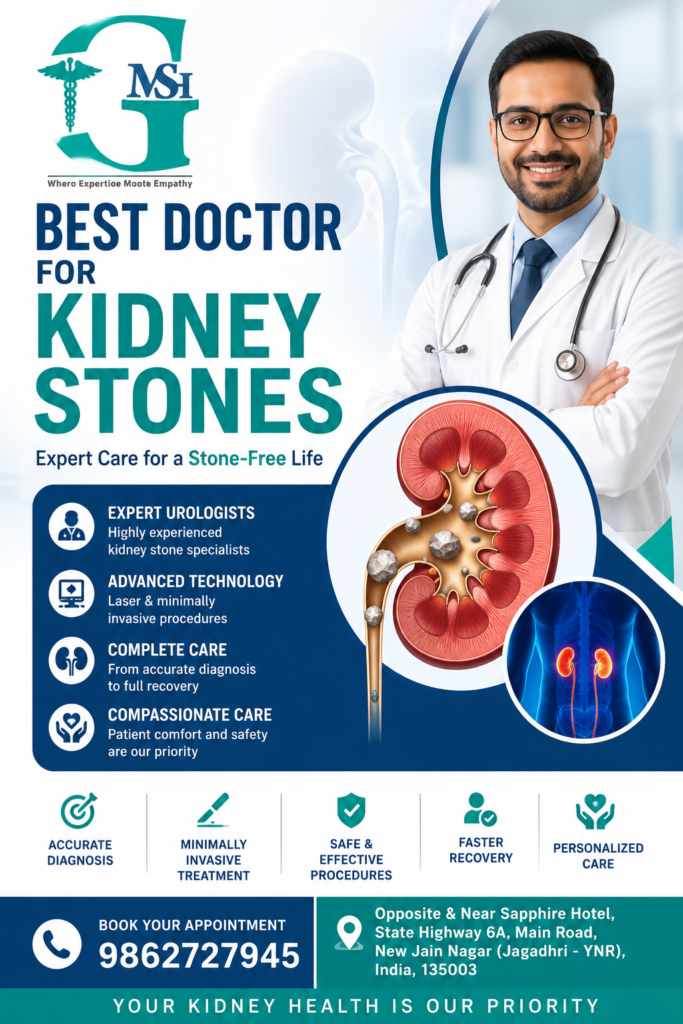
Why Choose Gurdevi Memorial SuperSpeciality Hospital?
Finding Best doctor for kidney stones is essential when dealing with kidney stones. Gurdevi Memorial SuperSpeciality Hospital provides comprehensive diagnosis and advanced treatment for patients with urinary stone disease.
Patients choose the hospital because of:
- Experienced urology specialists
- Modern diagnostic facilities
- Advanced minimally invasive procedures
- Personalized treatment plans
- Patient-focused care
- Faster recovery with advanced technology
- Comprehensive follow-up support
- Clean and comfortable healthcare environment
The team focuses on accurate diagnosis, effective treatment, and long-term prevention to help patients return to normal life confidently.
Tips Before Visiting a Kidney Stone Specialist
Prepare for your appointment by:
- Writing down your symptoms.
- Carrying previous medical reports.
- Listing current medications.
- Drinking enough water unless advised otherwise.
- Preparing questions about treatment options.
- Informing the doctor about previous kidney stones.
These steps help your doctor provide better care.
Why Early Treatment Is Important?
Ignoring kidney stone symptoms can lead to serious problems, including:
- Kidney infections
- Blocked urine flow
- Kidney damage
- Repeated pain episodes
- Reduced kidney function
Consulting the Best doctor for kidney stones early increases the chances of successful treatment while avoiding complications.
(FAQs)
- Who is the Best doctor for kidney stones?
The Best doctor for kidney stones is usually a qualified urologist who specializes in diagnosing, treating, and preventing kidney stone disease using medical and minimally invasive surgical techniques.
- Can kidney stones go away without surgery?
Yes. Small kidney stones often pass naturally with increased water intake, pain medication, and medicines that relax the urinary tract.
- What is the fastest treatment for kidney stones?
The fastest treatment depends on the stone’s size and location. Options include ESWL, ureteroscopy, and PCNL for larger stones.
- How can I prevent kidney stones from coming back?
Drink plenty of water, reduce salt intake, maintain a healthy diet, and follow your doctor’s advice regarding nutrition and lifestyle.
- What foods should I avoid if I have kidney stones?
Limit foods high in salt, excess animal protein, sugary drinks, and high-oxalate foods if recommended by your doctor.
Conclusion
Kidney stones can be painful, but they are highly treatable with the right medical care. Whether your stone is small enough to pass naturally or requires advanced treatment, timely diagnosis is essential for protecting your kidneys.
If you are Searching for the Best doctor for kidney stones, choose a healthcare provider with experience, modern technology, and personalized care. Contact Gurdevi Memorial SuperSpeciality Hospital who offers comprehensive evaluation, advanced treatment options, and ongoing support to help patients recover safely and reduce the risk of future kidney stones. Don’t ignore persistent pain or urinary symptoms—schedule your consultation today and take the first step toward better kidney health.