


Dr. Gagan Choudhary
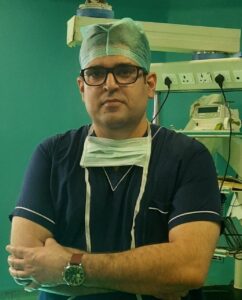
Dr. Gagan Choudhary
Dr. Gagan Choudhary is a highly experienced Pulmonologist & Critical Care Specialist with over 14 years of clinical experience, including more than a decade post-specialization. He is trained in managing complex respiratory diseases and critically ill patients in tertiary care settings.
With extensive expertise in interventional pulmonology, ICU care, and emergency medicine, Dr. Sharma is known for delivering precise diagnosis and compassionate, patient-centered treatment.
🎓 Qualifications
- DNB (Tuberculosis & Chest Diseases) – National Institute of Tuberculosis & Respiratory Diseases, New Delhi (2014)
- MBBS – Govt. Medical College, Baroda (M.S. University of Baroda)
- Registered with Delhi Medical Council
💼 Experience
Consultant – Pulmonary Medicine & Critical Care, Swami Vivekanand Multispeciality Hospital, Yamuna Nagar (2019–Present)
- Handling ~50 OPD patients daily
- Managing ICU and critically ill patients
- Performing 30–40 bronchoscopies/month
Attending Consultant – Pulmonology & Critical Care, Fortis Hospital, Noida (2017–2019)
- Handling ~50 OPD patients daily
- Managing ICU and critically ill patients
- Performing 30–40 bronchoscopies/month
Senior & Junior Resident – Respiratory Medicine, National Institute of TB & Respiratory Diseases, New Delhi (2011–2017)
Medical Officer
- BSES Yamuna Power Ltd
- East West Medical Centre & Rescue (Air/Ambulance repatriation)
Junior Resident, Dr. RML Hospital, New Delhi
🫁 Areas of Expertise
- Interventional Bronchoscopy (TBNA, TBLB, BAL, Biopsy)
- COPD & Asthma Management
- Lung Infections & Tuberculosis
- Critical Care & ICU Management
- Pleural Diseases & Procedures
- Ventilator Management
- Emergency Respiratory Care
⚕️ Procedures Performed
- Bronchoscopy (Diagnostic & Therapeutic)
- Pleural Fluid Aspiration & Pleurodesis
- Lung Biopsy (Tru-cut)
- Chest Tube Insertion
- Central Line & Arterial Line Placement
- Endotracheal Intubation
🚑 Special Experience
- Management of critically ill patients in ICU settings
- Experience in air & road ambulance patient transfers
- Handling multi-system critical illnesses
📚 Research & Academic Work
- Dissertation: Effect of Yoga in Pulmonary Impairment Post-Tuberculosis
Book An Appointment
🧠 Approach to Care
Dr. Sharma combines clinical expertise with strong interpersonal skills, ensuring that patients and families clearly understand diagnosis, treatment options, and recovery plans. He emphasizes:
- Early diagnosis
- Evidence-based treatment
- Patient education (inhaler use, smoking cessation)
- Compassionate critical care
💬 Patient-Centered Philosophy
Timely intervention, accurate diagnosis, and empathetic care are the pillars of successful treatment in respiratory and critical care medicine.
📞 Contact Information
- 📍 Location: Yamuna Nagar / NCR Region
- 📧 Email: drsachindilli@yahoo.co.in
- 📱 Phone: +91 8287690040
🧾 Languages
- English, Hindi
⭐ Why Choose Dr. Sachin Sharma?
- 14+ Years Experience
- Advanced Bronchoscopy Expertise
- ICU & Emergency Specialist
- High Patient Volume Handling
- Trusted in Critical Situations
Bladder Cancer
What is Bladder Cancer?
Bladder cancer is a condition in which abnormal cells grow uncontrollably in the lining of the urinary bladder. The bladder is the organ that stores urine before it leaves the body.
Most bladder cancers begin in the inner lining of the bladder and may spread to deeper layers if not treated in time. Early detection and treatment greatly improve the chances of successful management.
Symptoms
Common symptoms of bladder cancer include:
Blood in the urine (pink, red, or brown urine)
Frequent urge to urinate
Pain or burning during urination
Difficulty passing urine
Pain in the lower abdomen or back
In many cases, blood in urine without pain may be the first sign of bladder cancer.
Causes and Risk Factors
Several factors may increase the risk of bladder cancer:
Smoking or tobacco use
Long-term exposure to certain chemicals
Chronic bladder infections
Previous radiation therapy
Family history of bladder cancer
Increasing age (more common in older adults)
Diagnosis
To diagnose bladder cancer, doctors may recommend:
Urine tests to detect abnormal cells
Ultrasound of the bladder and kidneys
CT scan of the urinary tract
Cystoscopy – a procedure in which a thin camera is inserted into the bladder to examine its lining
Biopsy to confirm the presence of cancer cells
Treatment Options
Treatment for bladder cancer depends on the stage and extent of the disease.
1. Transurethral Resection of Bladder Tumor (TURBT): This is a common procedure used to remove early-stage tumors through the urethra.
2. Intravesical Therapy: In some cases, medications may be placed directly into the bladder to destroy cancer cells and prevent recurrence.
3. Surgery: If the cancer has spread deeper into the bladder wall, part or all of the bladder may need to be removed.
4. Chemotherapy or Radiation Therapy: These treatments may be used to destroy cancer cells or reduce the risk of recurrence.
Prevention
Although bladder cancer cannot always be prevented, certain steps may help reduce risk:
Avoid smoking and tobacco products
Drink adequate water daily
Limit exposure to harmful chemicals
Maintain a healthy lifestyle
When to See a Doctor?
You should seek medical advice if you notice:
Blood in the urine
Persistent urinary symptoms
Pain during urination
Frequent urination without clear cause
Early evaluation can help detect bladder cancer at an early stage when treatment is most effective.