

Kidney Stone (Urolithiasis)
Table of Contents
Kidney Stone (Urolithiasis)
What is it?
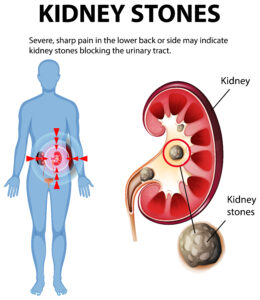
Kidney stone is a condition in which minerals and salts inside the kidneys form hard stone-like deposits.
These stones can be as small as grains of sand or sometimes grow larger. When a stone gets stuck in the urinary tract,
it can cause severe pain. This condition can occur in both men and women, but it is slightly more common in men.
Main Symptoms
- Severe pain on one side of the lower back or abdomen (kidney pain)
- Pain that may spread to the lower abdomen or groin
- Burning sensation while urinating
- Blood in urine (red or pink color)
- Frequent urge to urinate
- Nausea and vomiting
- Cloudy or foul-smelling urine
Sometimes small stones may pass out of the body without causing any symptoms.
Possible Causes
- Drinking less water
- High levels of minerals in urine
- Diet high in salt or protein
- Family history of kidney stones
- Obesity
- Recurrent urinary tract infections
Types of Kidney Stones
- Calcium stones – The most common type
- Uric acid stones – Often linked to high-protein diets
- Struvite stones – Usually caused by infection
- Cystine stones – Rare and caused by genetic conditions
Diagnosis
To confirm the diagnosis, doctors may recommend the following tests:
- Urine test
- Blood test
- Ultrasound KUB (Kidney, Ureter, Bladder)
- CT Scan KUB
In some cases:
- Stone analysis (testing a passed stone)
- Metabolic evaluation
Treatment
Treatment depends on the size, location, and symptoms of the stone.
1. Conservative Treatment (Small Stones)
- Drinking plenty of water
- Pain-relief medications
- Medicines that help the stone pass (Medical Expulsive Therapy)
2. Non-Surgical Procedures
- ESWL (Extracorporeal Shock Wave Lithotripsy) – Shock waves are used from outside the body to break the stone into small pieces.
- URS (Ureteroscopy) – A thin camera and instruments are inserted through the urinary tract to remove or break the stone.
3. Surgical Treatment
- PCNL (Percutaneous Nephrolithotomy) – Large stones are removed through a small incision in the back.
When to See a Doctor?
- Severe and persistent back pain
- Blood in urine
- Difficulty urinating
- Pain with fever
- Repeated kidney stone formation
Prevention and Lifestyle Tips
- Drink 2–3 liters of water daily
- Reduce salt intake
- Maintain a balanced diet
- Limit oxalate-rich foods such as spinach
- Exercise regularly
What to Do Next?
- Book an appointment
- Consult a doctor for proper evaluation and treatment
For More Information
- European Association of Urology – Non-Neurogenic Female LUTS Guidelines
- American Urological Association – Overactive Bladder Guidelines
- Urological Society of India – LUTS / OAB Practice Recommendations